“Oops! The doctor has been falsifying reviews about himself and his clinic for years!”
leger Legeforeningen, Den norske legeforening,Christer Torgilstveit Larsen | Fastlege, Christer T. Larsen, Majorstua, Oslo, Allmennlegespesialist og fastlege
The manipulation of patients’ trust and unethical marketing practices through the publication of false reviews for commercial purposes violate both the Health Personnel Act and the Marketing Control Act.
When a physician deliberately manipulates their own reputation by paying for or altering reviews, this undermines the trust between healthcare professionals and patients, and also breaches laws designed to protect patients’ rights and ensure fair marketing practices.
Norwegian Board of Health Supervision
Relevant legislation:
Health Personnel Act, Section 4 Requires professional responsibility, honesty, and trust between healthcare personnel and patients. Manipulation of a public reputation may be considered unethical and a violation of these principles.
Marketing Control Act, Sections 7 and 8 Prohibits misleading marketing and unfair commercial practices. When a physician, directly or through a third party, publishes false reviews to promote personal financial gain, this constitutes a breach of the Act’s requirements for honest and fair marketing.
This is not only a violation of professional ethics, but may also be considered unlawful under applicable legislation and may lead to legal consequences for those involved.
Christer Torgilstveit Larsen | Fastlege, Christer T. Larsen, Majorstua, Oslo, Majorstuen Medisinske Legelisten.no

2025
Manipulation of patients’ trust and unlawful marketing
A clear pattern of manipulation was observed in the reviews of this doctor on Legelisten, characterized by misleading and likely paid reviews. The reviews were frequently altered and written in a manner that could suggest the doctor himself was behind parts of the content raising serious ethical concerns and potentially undermining public trust. At the same time, some genuine experiences were not published, casting doubt on the site’s neutrality and credibility. For further insight into how Legelisten operates, it is recommended to read user reviews on Trustpilot.
Norwegian Board of Health Supervision Statens helsetilsyn
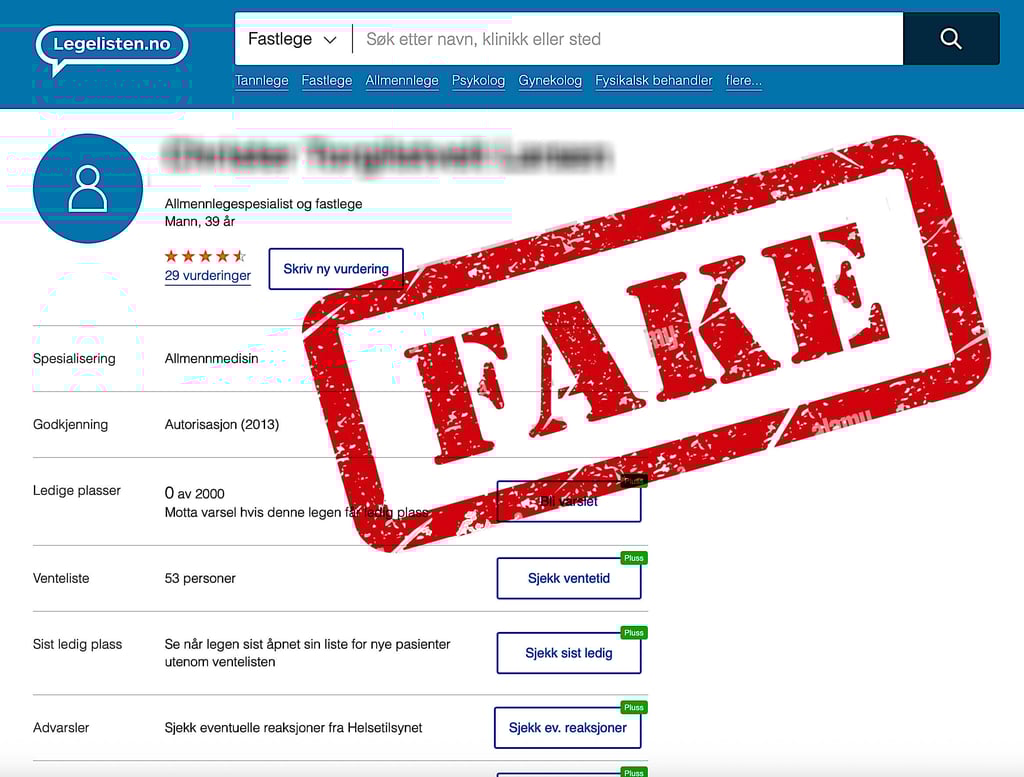
Isn’t it strange that this doctor does not have a single genuine positive review on reliable global platforms such as Google, Trustpilot, or Yelp, while dozens or perhaps hundreds of reviews appear abundantly and continuously on Legelisten? This platform has repeatedly been exposed for allowing misleading reviews in favor of doctors and for preventing patients from sharing their real experiences, with the doctor openly reviewing himself for payment, and possibly with assistance from the platform itself. Many details have been revealed by the public via this link: Trustpilot, Legelisten.
Even more surprising is that over 27 reviews for a long closed medical practice have been deleted, even though such information should have been presented and been a source of pride for the doctor, not removed as soon as the manipulation was exposed. How can people ignore reliable global platforms while trusting reviews of questionable credibility? Consider this paradox! What is written on that platform may come from only 5% real people, while the rest could be created by the doctor himself, possibly with help from the platform.
In accordance with recognized legal principles in Norway, it is crucial to draw attention to serious issues related to the handling of patient complaints and repeated violations committed against patients by both healthcare professionals and oversight bodies tasked with protecting patients’ rights and ensuring justice and integrity.
1. Balanced and fair case handling as a prerequisite for trust
The Public Administration Act § 17 stipulates that cases must be as thoroughly informed as possible before decisions are made. This requires that all parties’ explanations, including the patient’s, are considered and given weight. Dismissing the patient’s explanation without genuine assessment raises questions about impartiality and undermines trust in case handling.
2. The role of oversight in protecting patient rights
The Patient and User Rights Act grants patients the right to respectful treatment and appropriate healthcare. It is inconsistent with the law’s intent for oversight authorities to adopt a sanctioning stance toward patients or fail to respond to abuse and offensive behavior by healthcare professionals.
3. Recording medical information as retaliation is illegal
Health Personnel Act § 40 requires that recorded information be accurate, relevant, and objective. If medical records are used as a means of retaliation or contain false and subjective assessments of a patient’s mental or physical health, this constitutes serious misuse of the medical record system and a clear legal violation.
4. Institutional support for such practices constitutes failure in oversight responsibility
When oversight bodies choose to support healthcare workers known to pressure patients and falsify medical records with harmful intent, instead of stopping such misconduct, this constitutes complicity and systemic failure.
5. Use of threats and misleading documentation to prevent complaints
Patient and User Rights Act § 3-1 obliges healthcare professionals to treat patients with respect and dignity. Threats, retaliation, or false information aimed at intimidating patients from filing complaints constitute clear violations of patient rights. Failure of the institution to intervene sends a disturbing signal that such behavior is acceptable.
6. Collaboration with actors who violate patients constitutes institutional complicity
Allowing healthcare workers access to patient information to make false claims or portray patients as societal threats without legal basis violates both Public Administration Act § 17 and Health Personnel Act § 4.
7. Portraying patients as security threats without legal basis is abuse of authority
Neither the Health Personnel Act nor the Patient Rights Act authorizes classifying patients as threats to national security. If such assessments are made vindictively and supported by state authorities, it constitutes abuse of power and a violation of legal safeguards.
8. Manipulating health information to harm patients breaches trust and privacy
The Personal Data Act and Patient Record Regulations protect patients’ right to have information handled confidentially and properly. Manipulation or dissemination of false health information with the intent to cause social, legal, or psychological harm may be criminally punishable.
9. Institutional conspiracy to silence patient complaints
Supporting healthcare professionals who harass patients, combined with ignoring serious complaints from patients or their representatives, fosters a culture of fear and silence that replaces accountability and justice. This undermines the complaints system and patients’ legal protection.
On the basis of the above, relevant authorities are urged to conduct a full review of case handling practices and oversight functions. It is essential that patients’ rights are protected and that decisions are made on an objective and fair basis, not on vindictive or subjective grounds.
Based on all the evidence presented, it is clear that this doctor has been nothing more than a tool for deception and misleading practices. He has exploited his medical authorization unethically to harm patients and has misused the trust of public institutions, particularly the County Governor, to implement unjustified sanctions against them. He has also pressured and pursued patients by encouraging others to turn against them. In his statements, he openly admits to distrusting patients and considers them liars, which is in direct violation of medical ethics.
Christer Torgilstveit Larsen | Fastlege, Christer T. Larsen, Majorstua, Oslo, Majorstuen Medisinske
How can health authorities in a country known for its strong and reputable healthcare system allow a doctor, responsible for serious breaches of medical ethics, to continue practicing? How can it be justified that a healthcare professional, accused of using their position to pressure patients by misusing access to sensitive health information, still operates within the system?
This raises serious questions about how such practices can occur without consequences, and how a doctor can be trusted to run a medical practice despite repeated allegations of misrepresentation, falsified reviews, and hostile behavior toward patients.
Allowing such a person access to influence patients’ lives and health through their professional role poses a risk that cannot be underestimated. When medical authority is used to pursue, manipulate, and undermine patients’ rights, it jeopardizes not only individual patients but the entire public trust in the healthcare system.
Several reports indicate that patients have been subjected to persistent pressure, inaccurate assessments, and deprivation of rights as a result of the doctor’s influence on public institutions. This raises doubts about whether current oversight mechanisms are sufficient to prevent abuse of power in healthcare.
It is essential that health authorities conduct an independent and thorough review of the situation, including how a single actor was able to gain such extensive influence despite warnings and reports of concern. The system must enforce transparency, accountability, and ethically responsible practice.
If it is found that there are serious violations of professional ethical standards, these must be followed up with clear sanctions and immediate measures. Patient safety and dignity must always come first.
Even if the individual still holds authorization, it is highly doubtful that patient trust can be restored as long as such serious allegations remain unaddressed. Trust is the backbone of medical practice; without it, the entire system loses its legitimacy.medpoint AS, Majorstua, Oslo, Statsforvalteren i Østfold, Buskerud, Oslo og Akershus,Larsen, Christer Torgilstveit, Medpoint AS, Statsforvalteren i Østfold, Buskerud, Oslo og Akershus, Christer T. Larsen, Christer Torgilstveit Larsen | Fastlege, Majorstua, Oslo, Majorstuen Medisinske
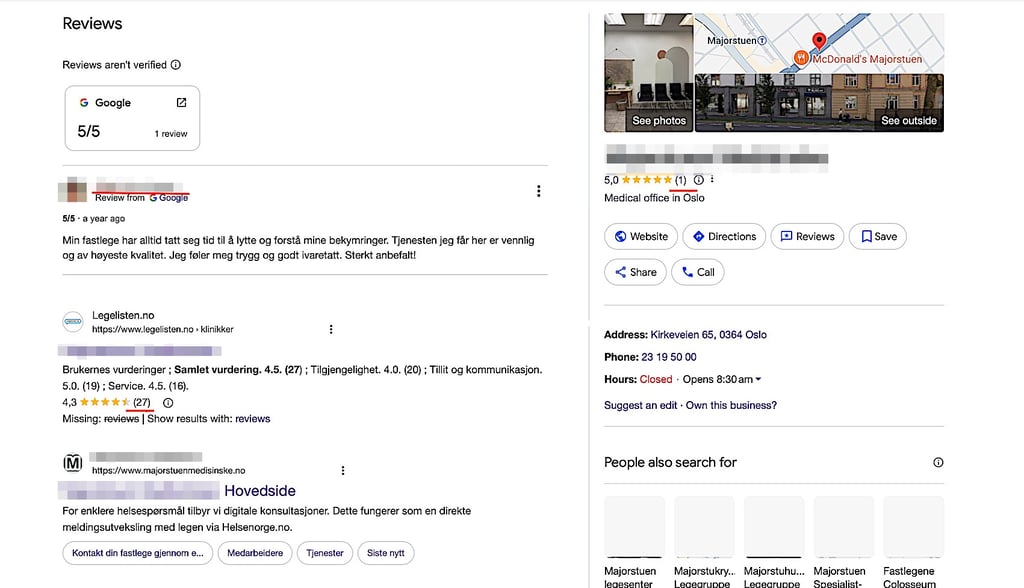
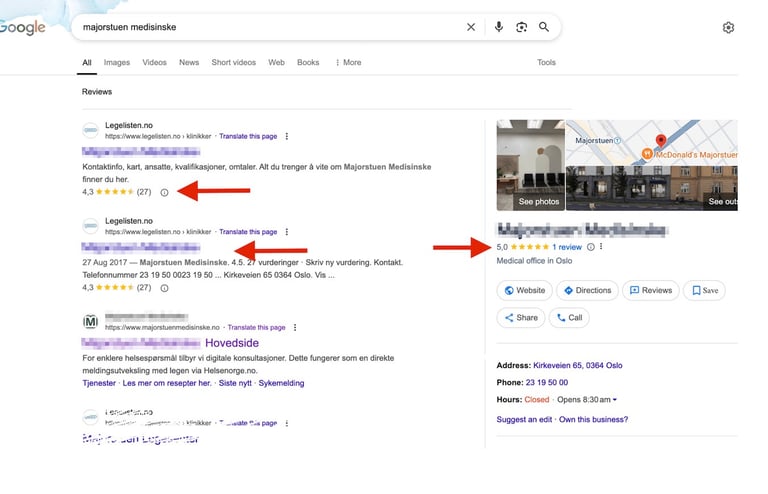
After the clinic profile was removed, the reviews remained temporarily visible on Google, shedding light on attempts at manipulation and raising questions about professional integrity. The police requested that screenshots of the reviews be taken and documented, and these were subsequently forwarded to the responsible health authority at the County Governor’s office.
It is hard to believe so many positive reviews, especially for a doctor who claims that all his patients lie. He has a troubling history of creating chaos at a previous medical center. A doctor who extorts his patients, pursues them, and manipulates health authorities to issue decisions motivated by revenge against the patients. This suggests that he fabricates these reviews himself to boast about himself and his clinic, even though his clinic is no larger than a waxing salon next door.Christer Torgilstveit Larsen | Fastlege, Christer T. Larsen, Majorstua, Oslo, Majorstuen Medisinske Legelisten.no
It is well known that Google does not allow falsification or manipulation of reviews, and therefore this doctor has no genuine reviews on his profile except for one transparent comment written by his brother in support of him, revealing his obvious attempt to manipulate his public image.

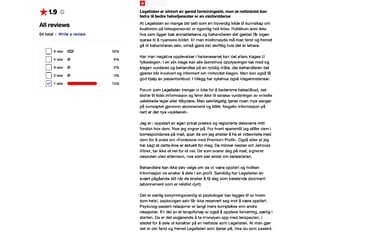
This is what the general public knows and says about the website Legelisten.no a controversial site with a questionable reputation, known for misleading patients through biased and selective reviews, often marked by a lack of quality control and possible manipulation by certain parties.
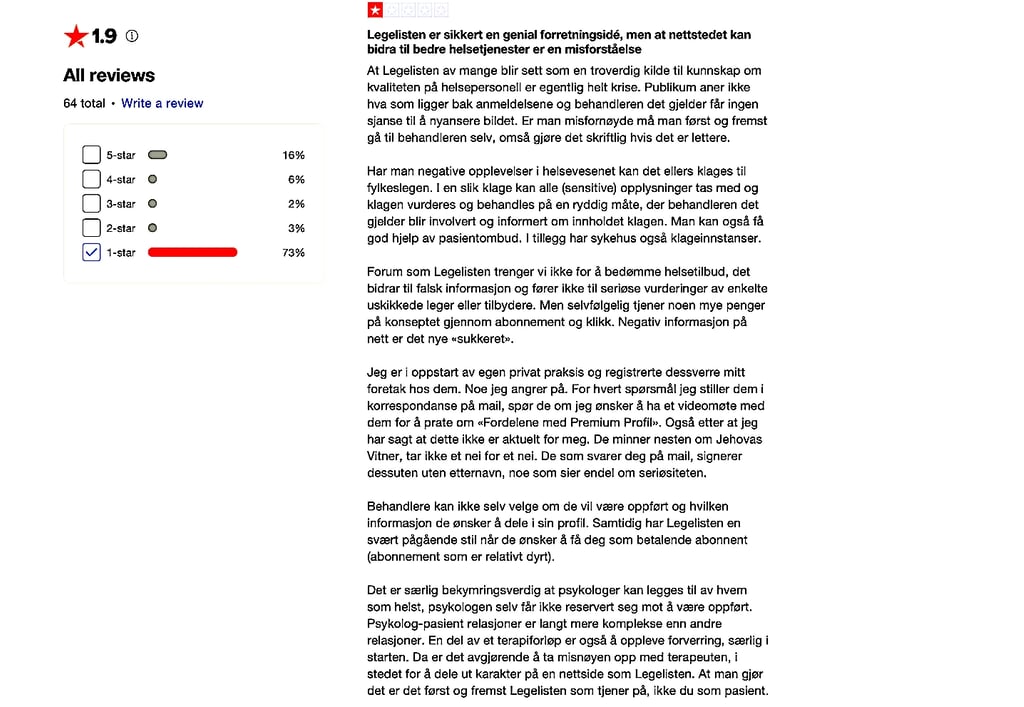
A comment from a doctor or therapist who published this post, describing Legelisten as a commercial project aimed at healthcare professionals.
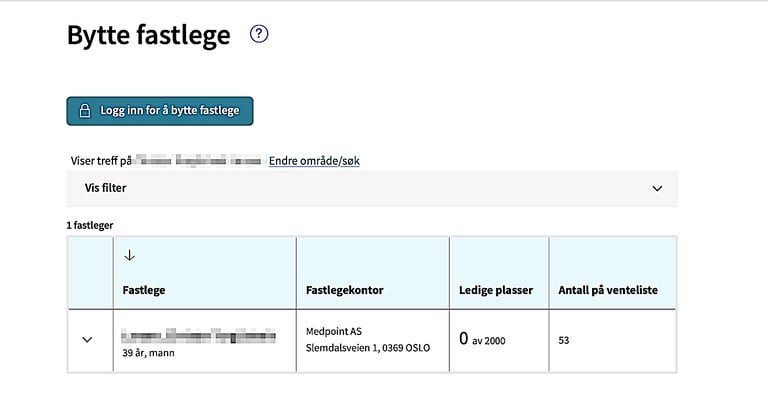
Warning to Patients: Considering Changing Doctors?
Before switching to this doctor, make sure that your medical record does not contain information entered against you for vindictive or unprofessional reasons. Multiple documented experiences show that this doctor does not respect his patients and treats their complaints as lies or false claims, something he has admitted in audio recordings.
Patients have reported that the doctor does not trust their accounts and instead treats them with suspicion. He uses medical notes to portray patients as untruthful and has harmed several by recording evaluations in a personal and vindictive manner.
The doctor does not follow professional ethical guidelines and uses medical documentation in a punitive and retaliatory way. He also manipulates health authorities in a dangerous and unethical manner, which harms patients and prevents them from receiving necessary care or treatment.
It is extremely concerning that the doctor acknowledges the inefficiency of health authorities and exploits this to exercise his manipulative and dangerous influence over patients.
Advice based on personal experience: You may think you are visiting a doctor for treatment, but in reality, you could end up facing defamation, punitive documentation, and a medical record used against you rather than to help you.
Norwegian Board of Health Supervision
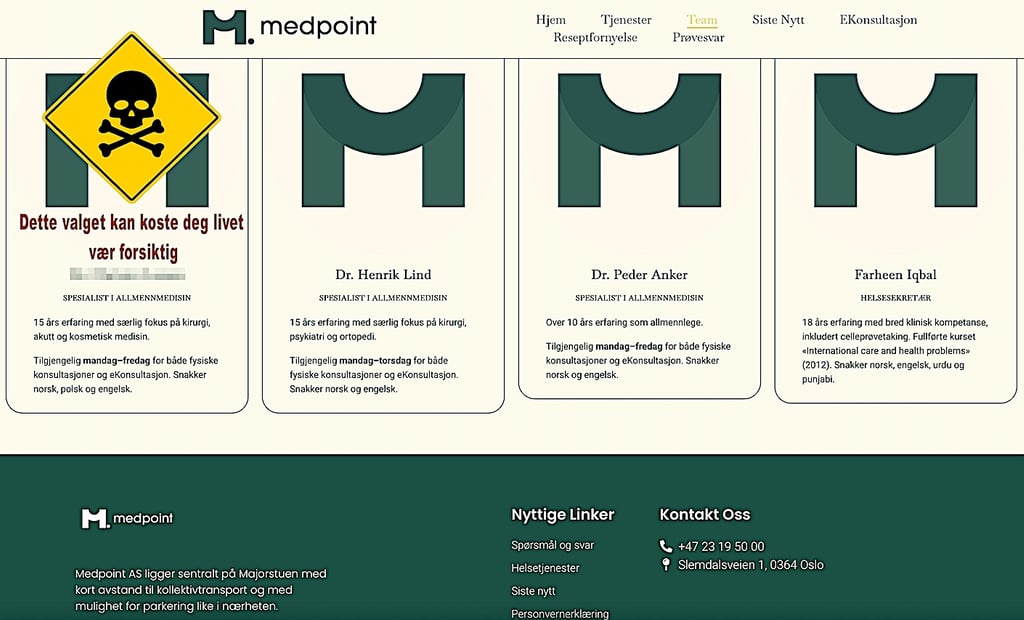
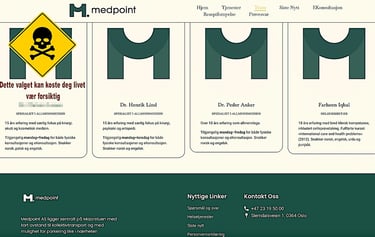
Testified on 22.04.2025
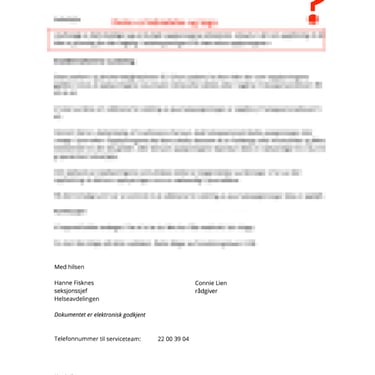
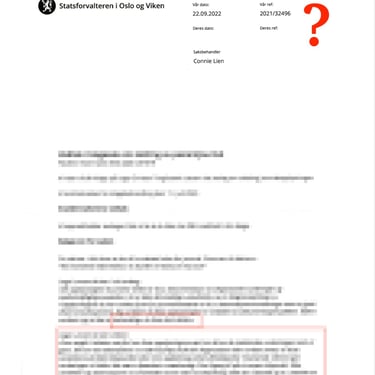
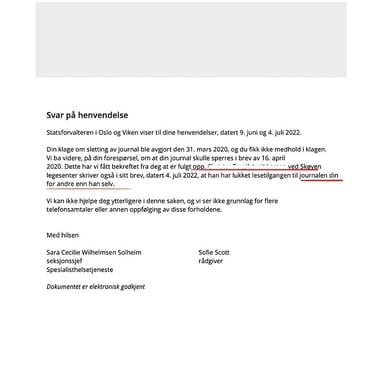
Some details have been anonymized for privacy reasons.
These documents raise serious and legitimate concerns, as they contain unusual and severe allegations against patients in a context that in no way aligns with the ethical and professional principles meant to govern the doctor, patient relationship.
It is important to note that these documents were disclosed illegally, without adherence to applicable laws or patient rights. The disclosure appears to have occurred on a reprehensible and vindictive basis, in collaboration with staff within the health authorities, including Hanne Fisknes, Connie Lien, Sara Cecilie Wilhelmsen Solheim, and Sofie Scott, with the aim of supporting a doctor with a questionable reputation. This is a doctor who himself claims to accuse his patients of lying and actively encourages distrust toward them.
It is extremely concerning that such a collaboration took place, and it remains unclear whether this was due to personal connections or if those involved were misled and manipulated.
Most seriously, the documents appear to have been used to give the doctor an unjust and unlawful position of power over the patients, enabling him to exert undue pressure and coercion to force them into silence. This was carried out through deliberate misinterpretation and distortion of medical and personal information with clear intent to violate, stigmatize, intimidate, and even blackmail the patients both psychologically and socially.
This information was recorded in reports issued by health authorities associated with the County Governor, raising serious questions about whether the full context and background were actually understood before approval was granted.
It is also important to note that these health authorities previously had insight into the patients’ situations and expressed support through oversight of healthcare organizations. The patients had also previously received recommendations and support from multiple specialized professional healthcare environments.
Remarkably, these documents were immediately used by the doctor in question to prevent the patients from receiving necessary medical care. They were used against the patients at critical and vulnerable moments, while they were simultaneously subjected to pressure and psychological exhaustion from healthcare personnel who mocked them and deliberately referred them back to the County Governor in Oslo. This appears to have resulted in serious consequences, including systematic psychological pressure and a deliberate restriction of access to basic healthcare services and potentially more.
When a medical report is used as a tool to intimidate patients and undermine their dignity and humanity in order to enforce silence rather than to protect them, it is long overdue to reconsider the legal and ethical standards that allowed the approval of such documents.
Om
Regarding information related to his professional background, the doctor has reportedly previously stated that he has held positions as a psychiatrist, military doctor, and cosmetic practitioner. It is noteworthy that he claims to have practiced multiple specialized professions simultaneously.
However, these claims raise legitimate questions, as there is no reliable evidence supporting his statements about an interdisciplinary professional career. In the Norwegian healthcare system, both laws and professional regulations require that doctors practicing in specialized areas such as psychiatry or military medicine must have completed specialized training programs and obtained recognized qualifications and certifications from accredited educational institutions.
For example, a doctor seeking approval as a psychiatrist in Norway must complete a specialized training program in psychiatry, including practical training under the supervision of specialists. For military medicine, in addition to standard medical education, specific military training is required. Regarding cosmetic treatments, this requires specialized education and recognized certifications in fields such as plastic surgery or dermatological cosmetic procedures, which cannot be legally or ethically practiced by a general practitioner without the necessary qualifications.
In the absence of documented evidence that the doctor has completed the required training programs or possesses the necessary certifications in these specialties, legitimate questions arise regarding the credibility of his claims. His practice and conduct may indicate activities that do not align with professional requirements, further undermining trust in his statements and raising concerns about whether his activities are conducted in accordance with recognized medical standards.


Meld deg på vårt nyhetsbrev
Registrer deg for vårt nyhetsbrev og ikke gå glipp av det nyeste innlegget.