Relationships Above the Law: The Health Department at the County Governor’s Office Ignores Patient Complaints and Undermines Trust Statsforvalteren.no Helse, omsorg og sosialtjenester Helsetjenester,Hanne Fisknes, Connie Lien, Sara Cecilie Wilhelmsen Solheim,Sofie Scott، Pasient- og brukerombudet hos Statsforvalteren. medpoint, Majorstuen
In a healthcare scandal that shakes patients’ trust in Norway and exposes institutional weaknesses that undermine human rights, recent investigations have highlighted serious deficiencies in oversight and patient protection mechanisms within a system internationally recognized as a model for healthcare services. What is occurring is not merely an isolated administrative error, but a systematic failure that has persisted for several years within one of the country’s leading supervisory authorities: the County Governor of Oslo and Viken, and the Norwegian Board of Health Supervision.
May 2024:
A report from the Office of the Auditor General revealed Riksrevisjonen that the authority had failed to follow up on 123 health related complaints that were never opened, in addition to ignoring 969 formal requests for information from patients and citizens over several years. These shocking figures represent not only administrative neglect, but a structural failure in handling sensitive cases affecting people’s health and dignity, particularly through a lack of transparency and responsiveness to questions concerning psychological and medical treatment that raised legal and ethical concerns.
The Most Serious Issues:
Documents showed that several patients had been subjected to compulsory psychiatric treatment without judicial review or independent supervision, constituting a direct violation of Articles 5 and 8 of the European Convention on Human Rights (ECHR). Article 5 guarantees the right to liberty and physical and mental security, while Article 8 protects privacy and prohibits unjustified interference with private life. Violations of these provisions in connection with compulsory treatment openly threaten the principles of the rule of law.
December 2024:
As a consequence of this administrative disaster, Valgerd Svarstad Haugland, Regional Director for the County Governor of Oslo and Viken, resigned after an internal investigation revealed a number of structural failures in handling complaints and supervising healthcare institutions, as well as a lack of early warning and institutional accountability.
January 2025:
The legal website Juristen.no published a comprehensive report confirming that these violations are not a recent phenomenon, but that administrative neglect has persisted for over five years. Hundreds of patients, particularly in mental health and complex medical areas, have been left without legal protection or adequate healthcare oversight, and without any real opportunity to have their voices heard or to have the violations they experienced addressed.
satsforvalteren.no Helse, omsorg og sosialtjenester Helsetjenester,Hanne Fisknes, Connie Lien, Sara Cecilie Wilhelmsen Solheim,Sofie Scott، Pasient- og brukerombudet hos Statsforvalteren. medpoint, Majorstuen


Testified on 28.05.2025
Hanne Fisknes, Connie Lien, Sara Cecilie Wilhelmsen Solheim, Sofie Scott، Pasient- og brukerombudet hos Statsforvalteren. medpoint, Majorstuen, Slemdalsveien 1, 0369 Oslo, Christer T Larsen
Breakdown in Responsiveness and Accountability?
The core of the County Governor’s work is its supervisory responsibility over municipalities and healthcare institutions, which is meant to ensure the protection of patients from abuse and provide prompt, transparent, and fair complaint procedures.
However, reality shows an almost total lack of administrative efficiency. The Office of the Auditor General described the situation in its report as “unacceptable” and urged the government to take concrete measures to rebuild trust in the health authorities.
This failure is worsened when we examine how the County Governor of Oslo and Viken handled patient complaints against a doctor who had been professionally criticized and found guilty of unethical behavior toward his patients, after publicly labeling them as “liars” and generally dismissing their credibility.
Nevertheless, the Patient and User Ombudsman at the County Governor’s office continued to support this doctor and ignored reports against him, reflecting a serious imbalance in protection and accountability.
Even more serious, according to documented testimonies and reports, the Patient and User Ombudsman at the County Governor in Oslo not only blocked channels of justice but also prevented independent supervisory and healthcare bodies from intervening or investigating, effectively monopolizing complaint handling.
Furthermore, they handed over sensitive and vindictive material to the doctor, giving him access to the complainants’ personal health information, in clear violation of data protection rules and patients’ privacy, without any legal basis. The information in these documents was not used for treatment purposes but was instead used to bring accusations, tarnish the patients’ reputations, encourage the denial of assistance and healthcare support, and to exert psychological, social, and coercive pressure on them. This constitutes a severe breach of the legal and professional principles governing the doctor-patient relationship.
These actions are interpreted as a means to pressure patients into withdrawing complaints and remaining silent about the doctor’s actual conduct.
This collapse in principles of privacy and accountability threatens not only individual rights but also undermines the very foundation of a healthcare system that should be built on trust, transparency, and human dignity.
Revealing Another Deep Systemic Crisis
Dr. Stig Wilhelm Persson Asplin is a physician of high ethical and humanitarian standards, who has devoted much of his professional life to saving lives and restoring the dignity of people trapped in the darkness of addiction. His efforts for patients struggling with substance abuse have been not only medical but deeply human. Many of these patients are now standing on their feet again, thanks to his understanding, continuity of care, and uncompromising loyalty to his medical responsibilities.
Despite this, the health authorities chose to revoke his prescription rights and prevent him from practicing, a decision that caused immense suffering for his patients and led to a legal process that lasted several years. It is therefore both moving and just that Dr. Asplin ultimately prevailed in court and regained his authorization, after a long struggle against bureaucratic and unfair structures.
This victory simultaneously highlights the deep paradox in healthcare priorities: while a doctor like Asplin, who has saved lives and restored trust, is obstructed, there are other doctors who, despite serious and documented breaches of medical ethics, continue to operate freely and with the support of the Patient and User Ombudsman at the County Governor’s office in Oslo.
Hanne Fisknes, Connie Lien, Sara Cecilie Wilhelmsen Solheim, Sofie Scott، Pasient- og brukerombudet hos Statsforvalteren. medpoint, Majorstuen, Slemdalsveien 1, 0369 Oslo, Christer T Larsen, Statsforvalteren.no Helse, omsorg og sosialtjenester Helsetjenester

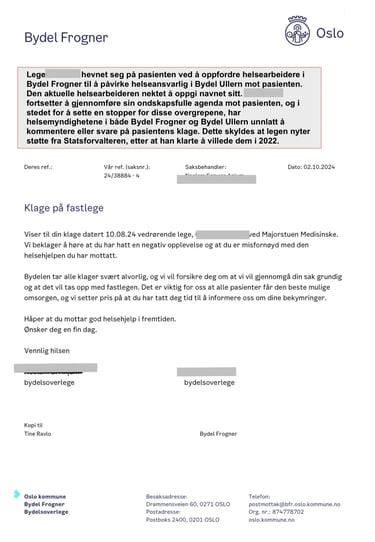
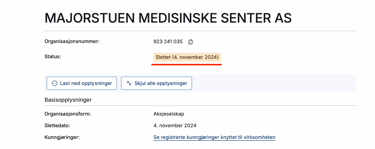
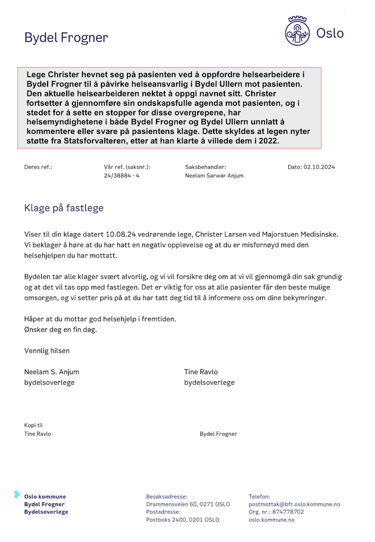
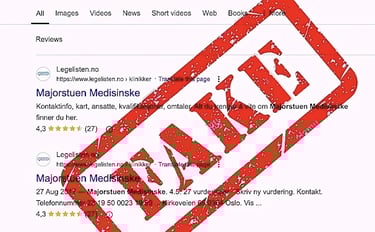

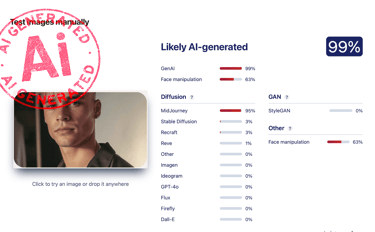

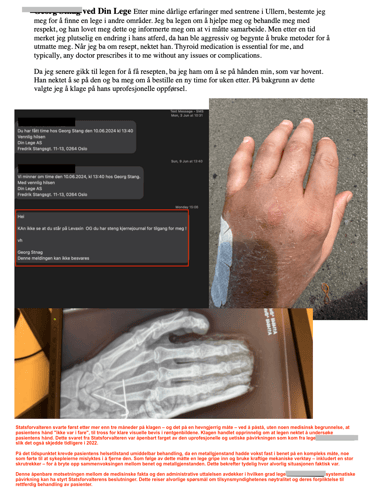
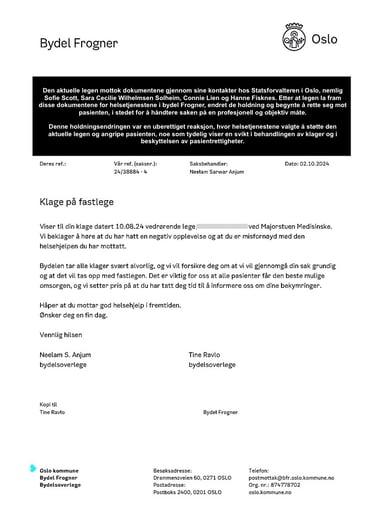
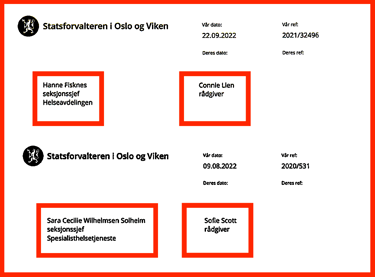
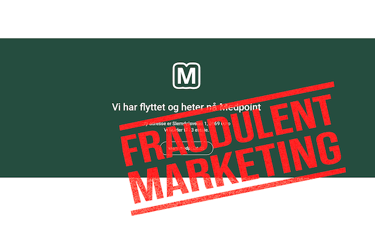
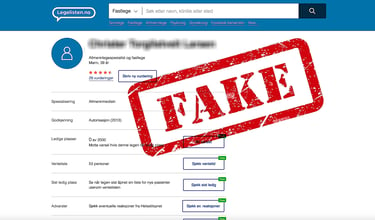
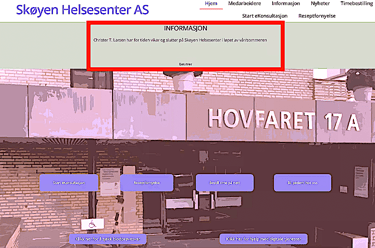
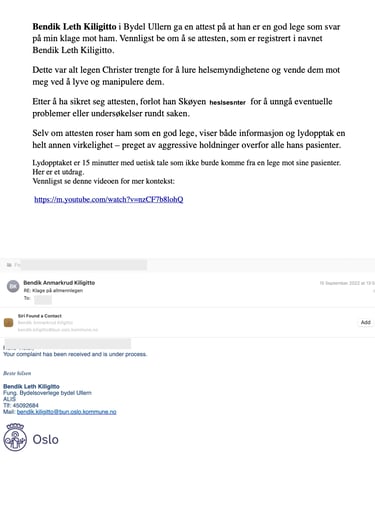
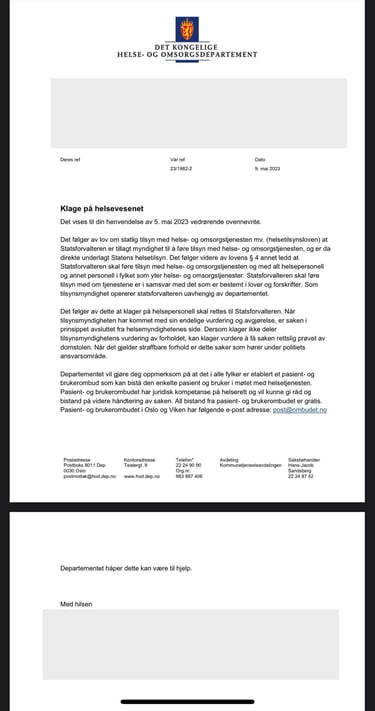
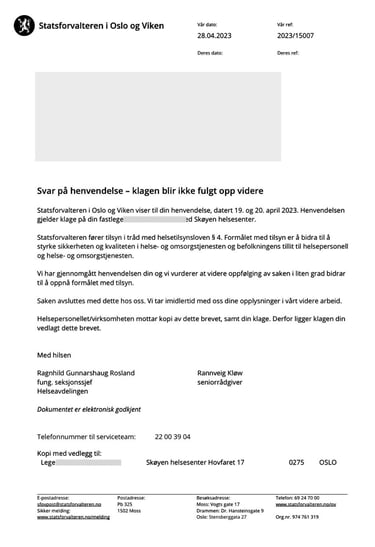
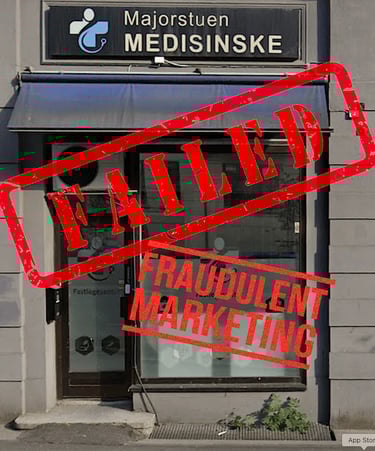
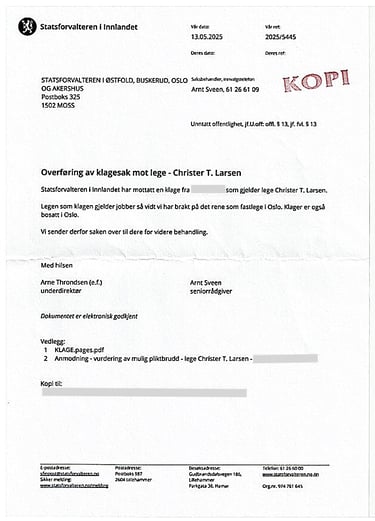
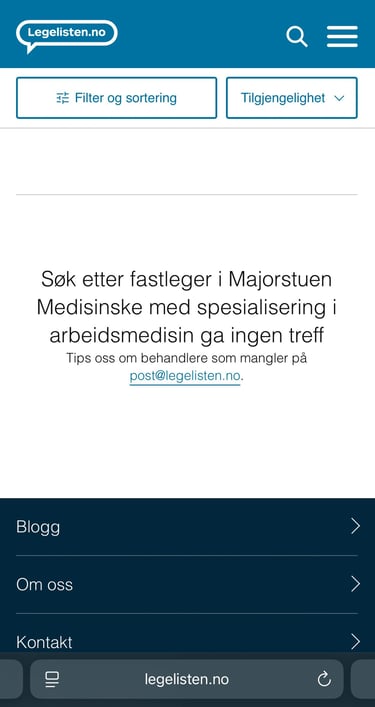
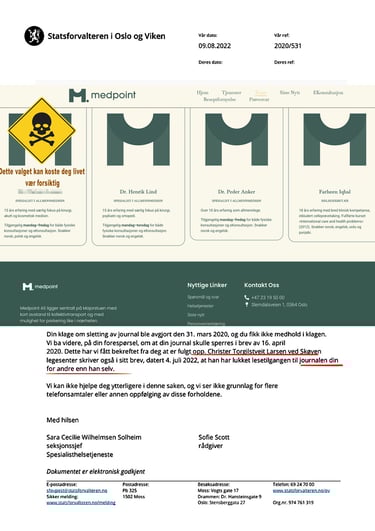
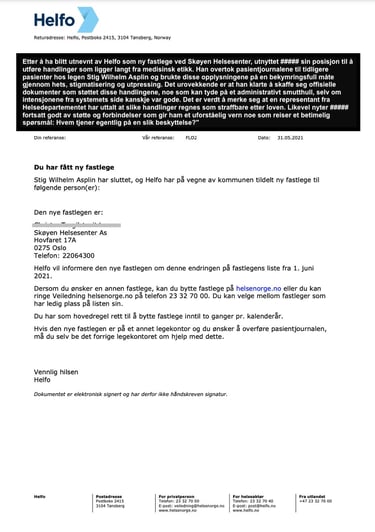
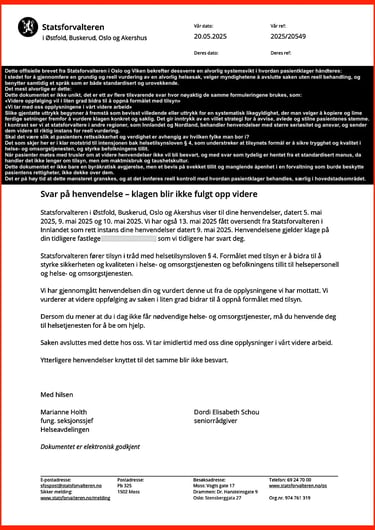
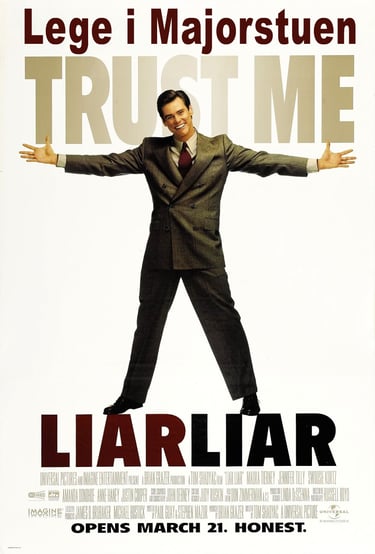
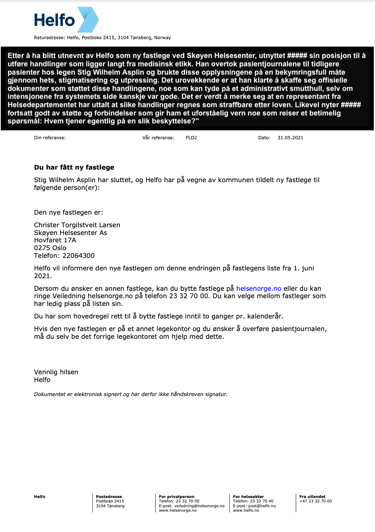
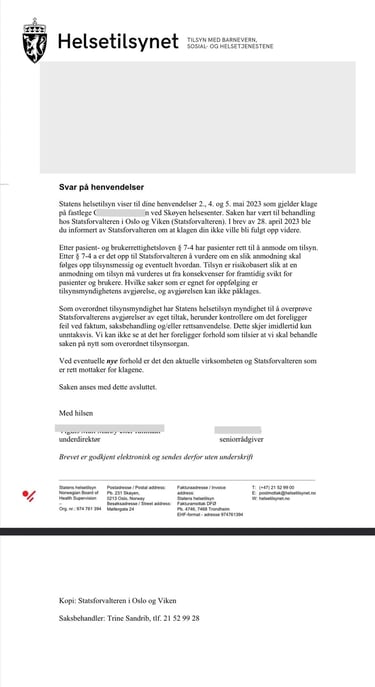
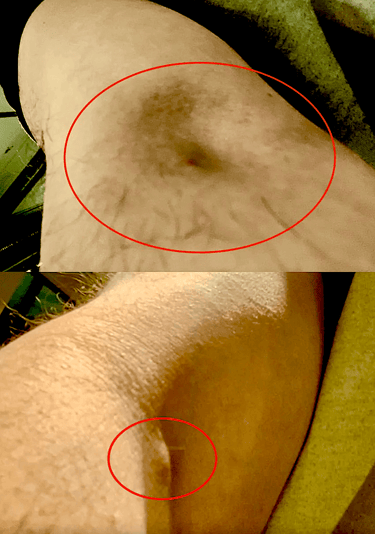




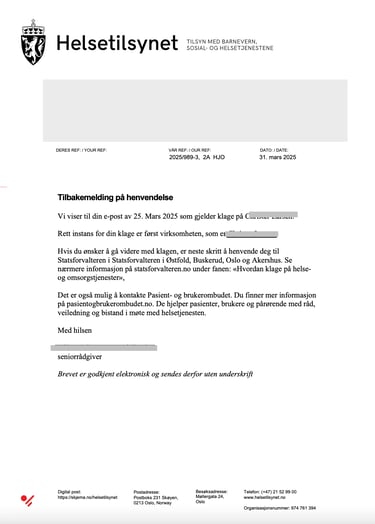

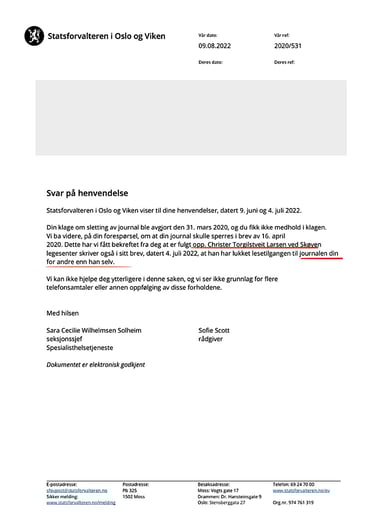



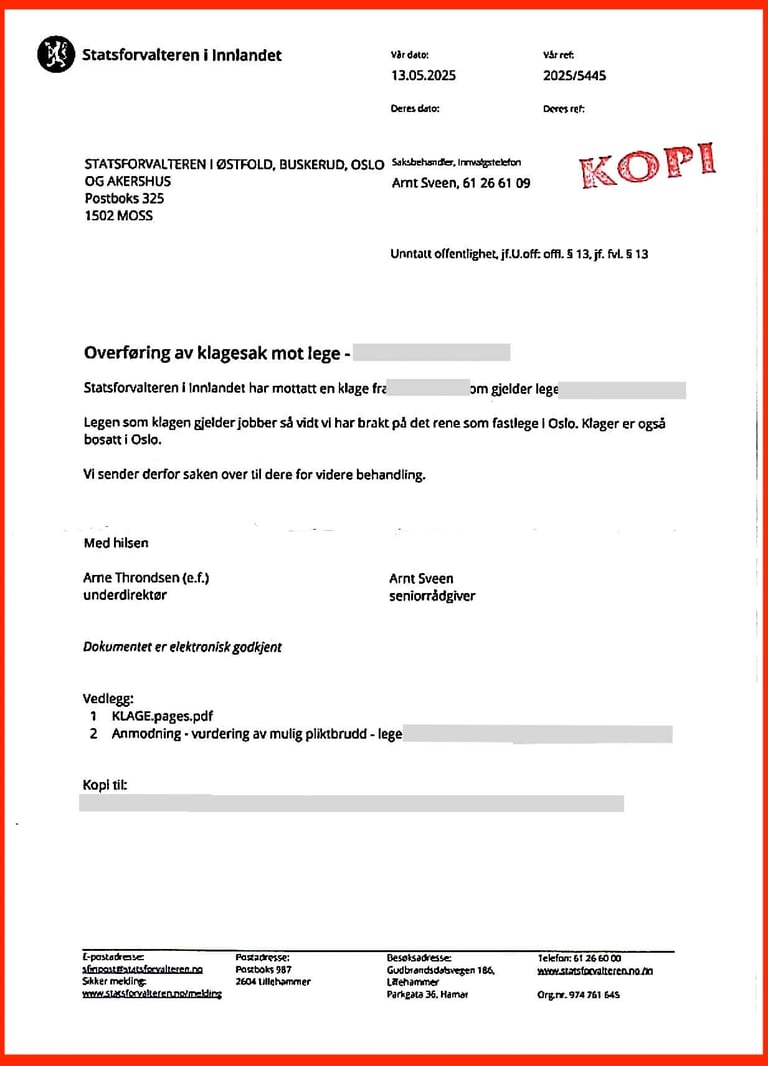
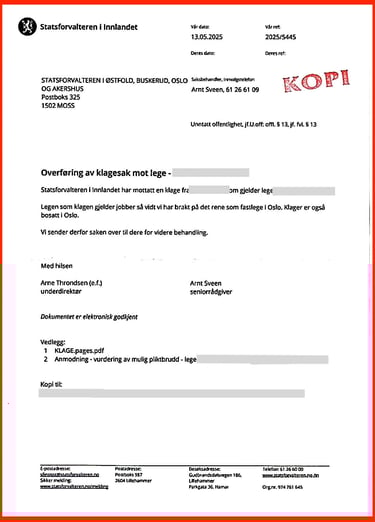
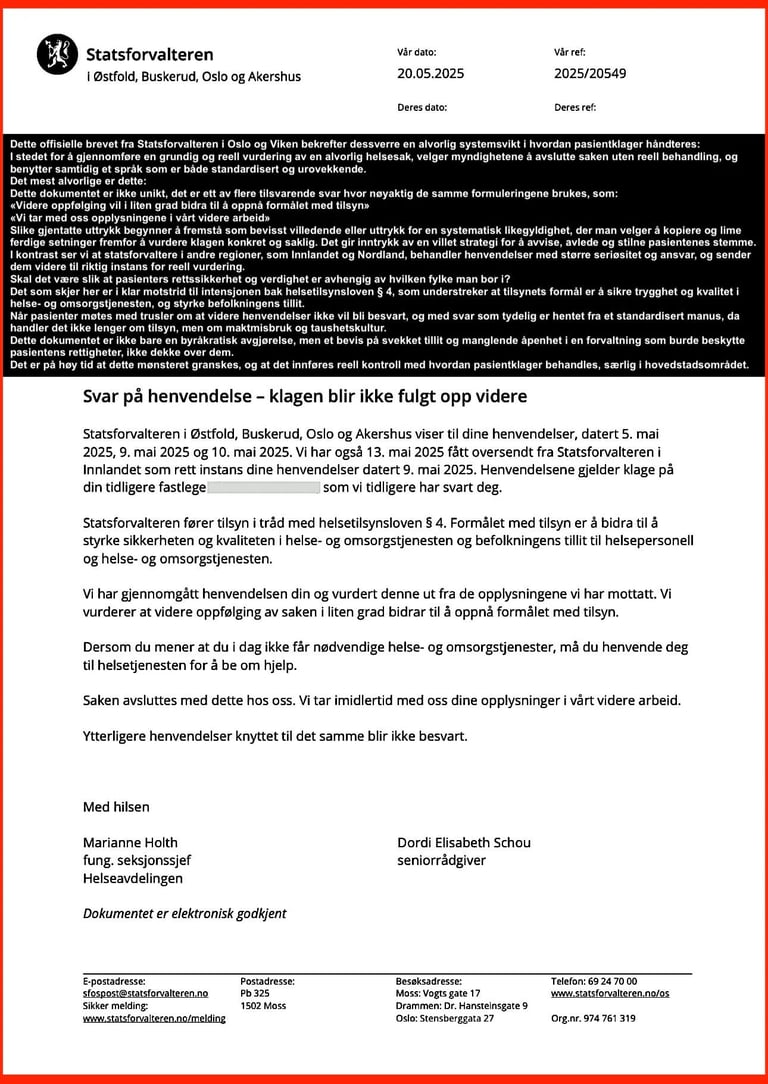
While patient cases are expected to be handled with legal respect and professional equality across Norway, this official document shows a clear difference in how the County Governor handles complaints depending on the region.
In areas such as Innlandet, the authorities have shown responsibility when receiving a complaint related to the doctor in question and forwarded the case to the competent authority in Oslo and Viken with a clear request to consider possible legal or service violations. This reflects an administrative model that respects the principles of neutrality, transparency, and the patient’s right to fair treatment and investigation in accordance with the Public Administration Act Section 11 and the Patient and User Rights Act.
In Oslo the situation is markedly different and deeply concerning.
The response from the health authorities at the County Governor came in the form of a threat that the patient’s future complaints regarding the doctor would not be answered instead of examining the content of the complaint. This appears to be a clear attempt to prevent further investigation and accountability and undermines the patient’s trust in the healthcare administration.
Previously, the same health authorities had granted the doctor exclusive access to the patient’s medical record, trust which the doctor later misused by distorting the content, presenting manipulated and false information, and using it as a tool to discredit the patient and actively prevent them from receiving healthcare.
Reliable sources indicate that between 2024 and 2025, the patient was systematically denied access to healthcare after an incompetent doctor exploited their influence and connections with the medical authorities in Frogner District Neelam Sarwar Anjum and Tine Ravlo. The sources indicate that this cooperation encouraged the medical authority in Ullern District, Chief Medical Officer Olaf Hesle, to act against the patient.
According to information, the latter secretly contacted the hospital in the autumn of 2024 and accused the patient of being mentally ill in what was described as a revenge attempt to legitimize unethical actions by themselves and the doctor in question. These actions constitute a clear violation of healthcare regulations and an example of abuse of position and incitement against patients without any scientific basis or evidence.
At the same time, the health authorities at the County Governor in Oslo showed obvious disregard for the complaint, and Frogner District did not respond to the inquiry, reflecting a complex network of relationships and cronyism that undermines the principles of justice and transparency in healthcare.
These actions point to a serious conflict of interest and possibly direct collaboration between certain health authorities and the doctor in question, which is a clear violation of the principles of neutrality, integrity, and transparency and weakens the public’s trust in the healthcare oversight system.
Legally, such conduct may constitute a breach of the Public Administration Act Section 11, which requires administrative bodies to provide guidance and respond to cases under their responsibility. Failing to do so is not only a violation of the patient’s rights but also a threat to the credibility and legitimacy of the system.
What began as isolated actions by the doctor quickly escalated due to a network of corruption and influence that was exploited. Hidden relationships and cronyism transformed the case from a simple medical issue into a health and administrative crisis that threatens patient safety and public trust in healthcare. When corruption goes unchallenged, it does not remain limited to one person but grows and spreads, poisoning all oversight and protective institutions, turning individual mistakes into an institutional catastrophe.
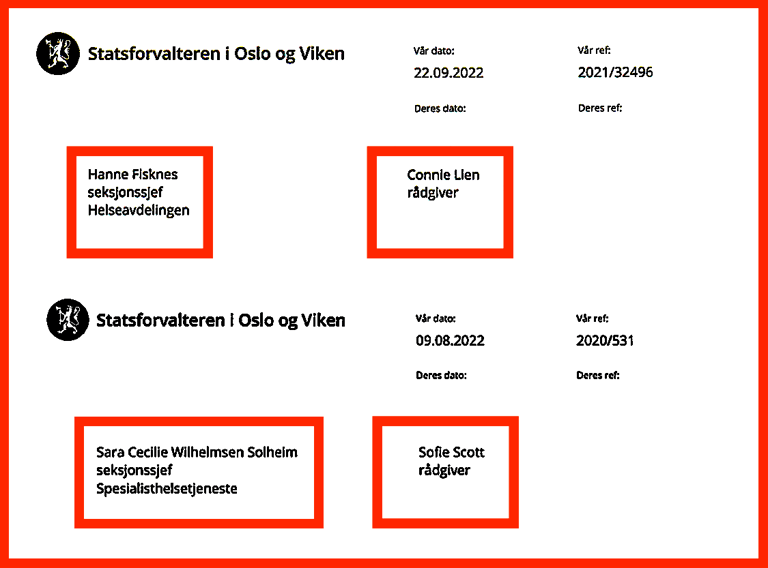

Sofie Scott, Sara Cecilie Wilhelmsen Solheim, seksjonssjef, Statsforvalteren i Oslo og Viken,Connie Lien, seksjonssjef Hanne Fisknes, Connie Lien Christer T. Laarsen

On the Other Side of Medical Authority: Doctors Undermining the Profession
On the other side of the medical hierarchy, there are doctors who harm the entire profession. These doctors have been accused of manipulation, extortion, psychological harassment via patient records, and defamation, without facing any consequences. They falsify workplaces, CVs, and evaluations to mislead patients and manipulate public opinion illegally, practicing unethically and unlawfully without accountability.
Even worse, these doctors receive special protection from the Patient and User Ombudsman at the County Governor’s office in Oslo, who ignores complaints and blocks accountability mechanisms instead of activating them. According to documented testimonies, this ombudsman not only prevented patients from accessing justice but also hindered independent healthcare and supervisory authorities from intervening.
“Employees such as Sara Cecilie Wilhelmsen Solheim, Sofie Scott, Hanne Fisknes, and Connie Lien provided the doctor with access to exclusive documents, allowing him to view patients’ medical records. This access was used in an obvious attempt to pressure patients into silence and prevent them from exposing the doctor’s actions or asserting their rights.”
This illegal action represents a clear form of coercion designed to force patients to withdraw complaints and remain silent about the doctor’s unethical practices, with no regard for the ethical and human responsibility of the health authorities to protect patients’ rights and dignity.
This constitutes a serious violation of data protection and patient privacy rules and illustrates a desperate, systematic attempt to shield the doctor by giving him a tool for psychological and health related harassment and extortion of patients in an arrogant and arbitrary manner. This does not occur in a vacuum but exposes a deeply flawed control system that allows such abuses to occur without consequence.
Multiple reports indicate how patients have been stripped of their rights, met with arrogance, and ignored by supervisory authorities, while a single doctor has gained disproportionate influence over the system. This raises fundamental questions about whom the health authorities actually serve: the patients’ rights and dignity, or a power structure that shields offenders behind institutional façades.
This crisis raises clear and fundamental questions:
Have relationships been used as instruments of power against patients and their health, or are there deeper, more complex underlying causes?
This case clearly reveals a systemic crisis threatening the core of healthcare and underscores the need for thorough reform to restore the balance between patient protection, support for conscientious doctors, and accountability for those who abuse their power at the expense of human dignity.
Loss of Trust Among Patients: Is There a Solution?
Trust in healthcare is built not only on the quality of services but also on effective and independent oversight, transparent complaint procedures, and clear accountability.
The failure of the Patient and User Ombudsman at the County Governor’s office in Oslo to treat patients fairly and impartially represents not merely administrative negligence but a serious threat to the relationship between the state and its citizens in a domain that should be governed by justice, care, and professionalism.Hanne Fisknes, Connie Lien, Sara Cecilie Wilhelmsen Solheim, Sofie Scott، Pasient- og brukerombudet hos Statsforvalteren. medpoint, Majorstuen, Slemdalsveien 1, 0369 Oslo, Christer T Larsen, Statsforvalteren.no Helse, omsorg og sosialtjenester Helsetjenester
Om
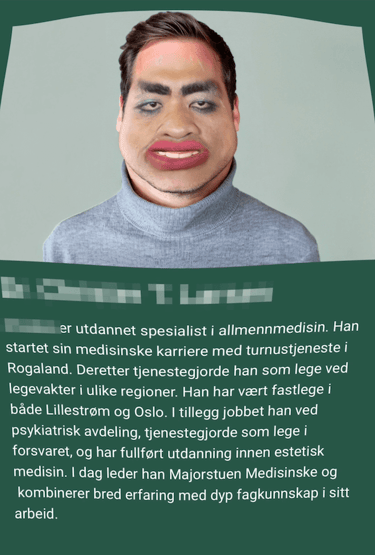
Regarding the information related to his professional background, the doctor has allegedly previously stated that he has held positions as a psychiatrist, military doctor, and cosmetic practitioner. It is notable that he claims to have practiced multiple specialized professions simultaneously.
However, these claims raise legitimate questions, as there is no reliable evidence supporting his statements about an interdisciplinary career. In the Norwegian healthcare system, both the law and professional regulations require that doctors practicing in specialized fields such as psychiatry or military medicine have completed specialized training programs and obtained recognized qualifications and certifications from approved educational institutions.
For example, a doctor who wishes to be recognized as a psychiatrist in Norway must complete a specialized training program in psychiatry, which includes practical training under the supervision of specialists. For military medicine, additional specific military training is required on top of regular medical education. Regarding cosmetic treatments, specialized education and recognized certifications are necessary in fields such as plastic surgery or dermatological cosmetics, areas that cannot be practiced by a general practitioner without the required qualifications.
In the absence of documented evidence that the doctor in question has completed the necessary training programs or possesses the required certifications in these specialties, legitimate questions arise regarding the credibility of his statements. His practice and conduct may suggest activities that do not comply with professional requirements, which further undermines trust in his claims and raises questions about whether his activities are conducted in accordance with recognized medical standards.


Meld deg på vårt nyhetsbrev
Registrer deg for vårt nyhetsbrev og ikke gå glipp av det nyeste innlegget.